At Garud Ortho Clinic, Kalyan West, Dr Amit Garud — Orthopaedic & Trauma Surgeon — often treats fractures that plaster alone can't fix. Many patients assume all fractures heal naturally, but certain injuries need surgical fixation to restore proper alignment and function.
A fracture may require surgery when the bone is displaced, involves a joint, or is unstable. The American Academy of Orthopaedic Surgeons (AAOS) notes that improper alignment can lead to long‑term stiffness, arthritis, and poor healing.
Common situations where surgery is advised include:
Open fractures (bone exposed through skin)
Fractures with severe displacement
Hip, wrist, ankle, and shoulder fractures involving joints
Multiple fractures after high‑impact injuries
Fractures not healing with plaster (non‑union)
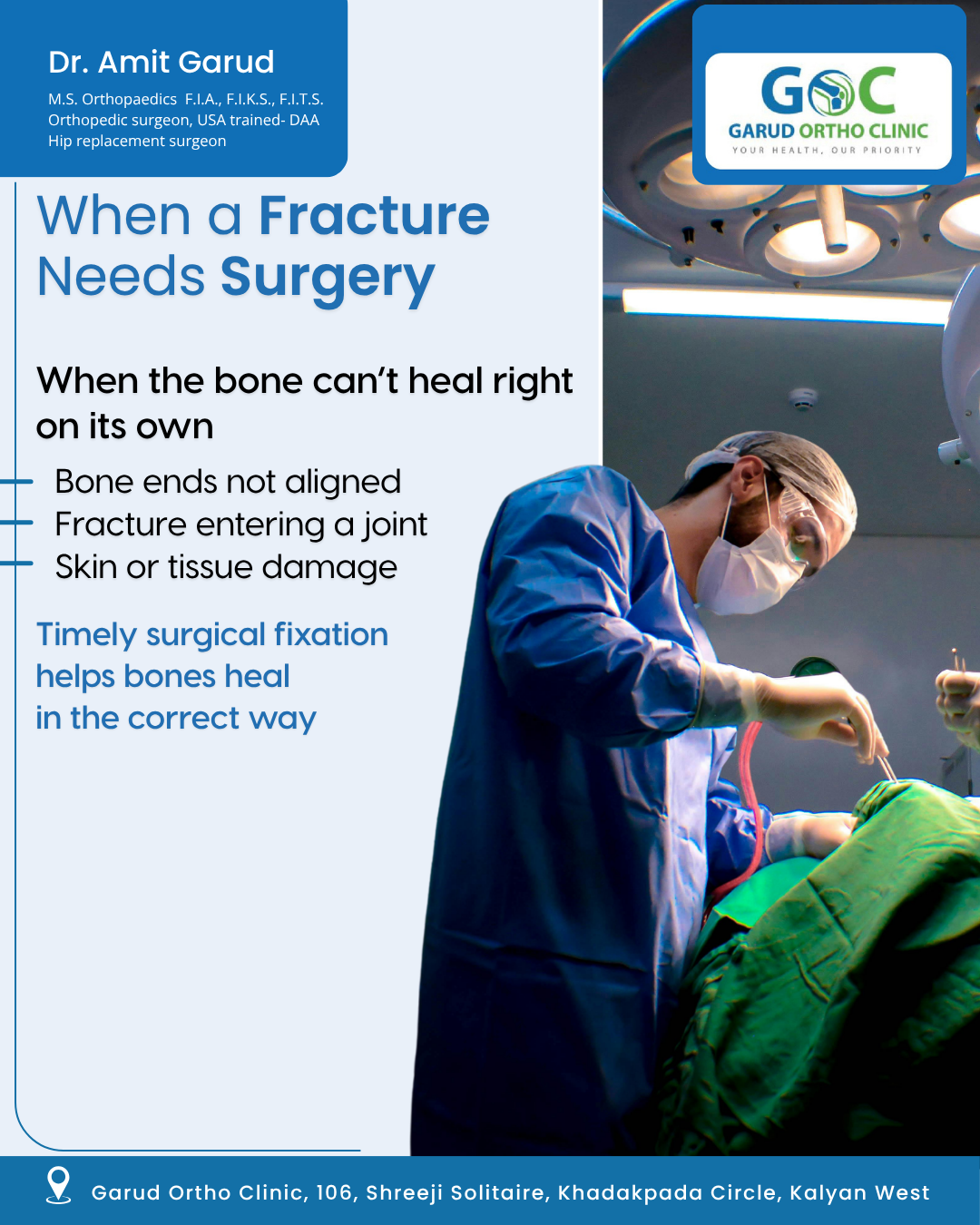
Timely surgical fixation helps bones heal in the correct position, reduces pain, and restores mobility faster. If swelling, deformity, or inability to bear weight persists, an orthopaedic evaluation is essential.
Reference: AAOS Fracture Management Guidelines
Disclaimer: Educational content only. Treatment decisions vary by patient condition.
Keywords